

- Class 10 Java Program
- ICSE Java Programs - Home
- Year 2025 Programs
- Short Questions/Answers
- Class & Object Based Program - CloudStorage
- Square root of sum of squares of all elements - NORM
- Super String Program
- Binary Search Program
- Menu Driven Program
- Check Sum Program
- Solved Specimen Question Paper Year 2025 Programs
- Short Questions/Answers
- Class & Object Based Program - Bank
- Binary Search Program
- String to Uppercase Program
- Sum of Row in Array Program
- SUPERSPY Program
- Menu Driven Program - Overload Method
- Year 2024 Programs
- Short Questions/Answers
- Class & Object Based Program - Courier Service Program
- Method Overloading Program
- EvenPal Program
- Diagonal Array Program
- Selection Sort Program
- Gmail ID Validation Program
- Solved Specimen Question Paper Year 2024 Programs
- Short Questions/Answers
- Class & Object Based Program - Eshop
- Selection Sort Program
- Count the Vowels Program
- Sum of Even & Odd Elements in Array Program
- Duck Number Program
- Method Overloading Program
- Year 2023 Programs
- Short Questions/Answers
- Class & Object Based Program - Student Stream Allocation
- Bubble Sort Program
- Menu Driven Program - Overload Method
- Print Number of Digits, Alphabets and Special Characters Program
- Linear Search Program
- Sum of Single and Double Digit Number in Array Program
- Year 2021 Programs
- Short Questions/Answers
- Class & Object Based Program - Hotel Bill Calculation
- Bubble Sort Program
- Menu Driven Program - Overload Method
- Method Overloading - Pattern & Series
- EvenPal Program
- Student Range Program
- Year 2020 Programs
- Short Questions/Answers
- Class & Object Based Program - Cab Service
- Binary Search Technique Program
- UpperCase Conversion Program
- Method Overloading
- Menu Driven Program - Pattern & Series
- Double Dimensional Array - Diagonal Sum
- Solved Specimen Question Paper Year 2020
- Short Questions/Answers
- Class & Object Based Program
- Arrange Student details using Selection Sort Method
- Class Overload Program
- Menu Driven Program
- Sum of elements in Double Dimensional Array Program
- Pair of Vowels Program
- Year 2019 Programs
- Short Questions/Answers
- Class & Object Based Program
- Menu Driven Program - Generate Unicode, Pattern
- Sort Array Elements in Ascending Order using the Bubble Sort Technique Program
- Series Overload Program
- Count Letters in a Sentence Program
- Tech Number Program
- Year 2018 Programs
- Short Questions/Answers
- Class & Object Based Program - Railway Ticket
- Pronic Number
- Proper Case Sentence Program
- Function Overloading - Volume Program
- Menu Driven Program - Pattern
- Deviation Program
- Year 2017 Programs
- Short Questions/Answers
- Class & Object Based Program - Electric Bill
- Spy Number Program
- Menu Driven Program - Series Program
- Array Based Program - Largest Number, Smallest Number, Sum of Numbers Program
- Function Overload - String Program
- Alphabet Sort - Selection Sort Techniques Program
- Solved Specimen Question Paper Year 2017 Programs
- Short Questions/Answers
- Class & Object Based - Taxi Meter Program
- Menu driven - Sum of Series Program
- Abbreviation Program
- Largest & Smallest Integer in Array Program
- Sum of Prime Numbers Program
- Sort Names in Array Program
- Year 2016 Programs
- Short Questions/Answers
- Class & Object - Book Fair Program
- Menu Driven - Pattern Program
- Palindrome or Special Word Program
- Function Overloading - Sum of Series Program
- Niven Number Program
- Two Different Arrays Program
- Year 2015 Programs
- Short Questions/Answers
- Class & Object - Parking Lot Program
- Pattern Program
- Array Based Student Result Program
- Function Overloading String Based Program
- Arrange Names - Bubble Sort Technique Program
- Menu Driven - Factors/Factorial Program
- Year 2014 Programs
- Short Questions/Answers
- Class & Object - Movie Magic Program
- Special Two-digit Number Program
- Assign Full Path and File name Program
- Function Overloading - Area Program
- Menu Driven - Bank Deposit Program
- Array Sort - Binary Search Program
- Year 2013 Programs
- Short Questions/Answers
- Class & Object - FruitJuice Program
- International Standard Book Number (ISBN) Program
- Piglatin Program
- Descending Order Bubble Sort Program
- Function Overloading - Sum of Series Program
- Menu Driven - Composite Number / Smallest digit in Number Program
- Year 2012 Programs
- Short Questions/Answers
- Class & Object - Library Program
- Income Tax Calculation Program
- Double Letter Sequences in a String Program
- Function Overloading - Polygon Program
- Menu Driven - Fibonacci / Sum of Digits Program
- STD (Subscriber Trunk Dialing) Codes Program
- Year 2011 Programs
- Short Questions/Answers
- Class & Object - Mobike Program
- Descending Order - Selection Sort Program
- Special Number Program
- New Word by replacing Vowels with the next Character Program
- Function Overloading - Compare Integers, Characters, Strings Program
- Menu Driven - Series Program
- Year 2010 Programs
- Short Questions/Answers
- Binary Search Program
- Class & Object - Student Marks Program
- Ticket Discount Program
- Menu Driven - Prime Number / Automorphic Number Program
- Combine Two Arrays in Third Array Program
- Frequency of Characters in a String Program
- Year 2009 Programs
- Short Questions/Answers
- Electronic Shop Discount Program
- Generate Triangle / Inverted Triangle Program
- Longest Word Program
- Function Overloading - Number Calculation Program
- Menu driven - BUZZ Number / GCD Program
- Exam Results Program
- Year 2008 Programs
- Short Questions/Answers
- Tax Computation Program
- Reverse Uppercase & Lowercase in String Program
- Sort String Bubble Sort Program
- Menu Driven - Palindrome / Perfect Number Program
- Function Overloading - Volume Program
- Sum of Series Program
- Year 2007 Programs
- Short Questions/Answers
- Salary Calculation Program
- Sum of Series Program
- Maximum & Minimum Program
- Count of a word in String Program
- Menu Driven - Temperature Program
- Palindrome Program
Java Programs - Solved 2025 ICSE Computer Science Paper
 Share with a Friend |
Solved 2025 ICSE Computer Science Paper
Class 10 - ICSE Computer Science Solved Papers
Short Questions/Answers - ICSE 2025 Computer Science
Question 1
Choose the correct answer to the questions from the given options.
(i)
Name the above structure:
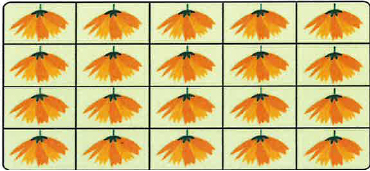
(a) One dimensional array
(b) Two-dimensional array with 4 rows and 5 columns
(c) Three-dimensional array
(d) Two-dimensional array with 5 rows and 4 columns
(ii) “Java compiled code (bytecode) can run on all operating systems.”
– Name the feature.
(a) Robust and Secure
(b) Object-Oriented
(c) Platform-independent
(d) Multithreaded
(iii) The size of ‘\n’ is:
(a) 2 bytes
(b) 4 bytes
(c) 8 bytes
(d) 16 bytes
(iv) Identify the operator that gets the highest precedence while evaluating the given expression: a + b % c * d – e
(a) +
(b) %
(c) –
(d) *
(v) Which of the following is a valid Java keyword?
(a) If
(b) BOOLEAN
(c) static
(d) Switch
(vi) The output of the following code is:
System.out.println(Math.ceil(6.4) + Math.floor(-1-2));
(a) 3.0
(b) 4
(c) 3
(d) 4.0
(vii) Which of the following returns a String?
(a) length()
(b) charAt(int)
(c) replace(char, char)
(d) indexOf(String)
(viii) Which of the following is not true with regards to a switch statement?
(a) checks for an equality between the input and the case labels
(b) supports floating point constants
(c) break is used to exit from the switch block
(d) case labels are unique
(ix) Consider the array given below:
char ch[] = {‘A’, ‘E’, ‘I’, ‘O’, ‘U’};
Write the output of the following statement:
System.out.println(ch[0] * 2);
(a) 65
(b) 130
(c) ‘A’
(d) 0
(x) To execute a loop 10 times, which of the following is correct?
(a) for(int i = 11; i <= 30; i += 2)
(b) for(int i = 11; i <= 30; i += 3)
(c) for(int i = 11; i < 20; i++)
(d) for(int i = 11; i <= 21; i++)
(xi) A single dimensional array has 50 elements, which of the following is the correct statement to initialize the last element to 100?
(a) x[51] = 100;
(b) x[48] = 100;
(c) x[49] = 100;
(d) x[50] = 100;
(xii) Method prototype for the method compute which accepts two integer arguments and returns true/false.
(a) void compute(int a, int b)
(b) boolean compute(int a, int b)
(c) Boolean compute(int a, b)
(d) int compute(int a, int b)
(xiii) The statement that brings the control back to the calling method is:
(a) break
(b) System.exit(0)
(c) continue
(d) return
(xiv) The default value of a boolean variable is:
(a) False
(b) 0
(c) false
(d) True
(xv) The method to convert a lowercase character to uppercase is:
(a) String.toUpperCase()
(b) Character.isUppercase(char)
(c) Character.toUpperCase(char)
(d) toUpperCase()
(xvi) Assertion (A): Integer class can be used in the program without calling a package.
Reason (R): It belongs to the default package java.lang.
(a) Both Assertion (A) and Reason (R) are true and Reason (R) is a correct explanation of Assertion (A)
(b) Both Assertion (A) and Reason (R) are true and Reason (R) is not a correct explanation of Assertion (A)
(c) Assertion (A) is true and Reason (R) is false
(d) Assertion (A) is false and Reason (R) is true
(xvii) A student executes the following code to increase the value of a variable ‘x’ by 2.
He has written the following statement, which is incorrect.
x =+ 2;
What will be the correct statement?
A. x += 2;
B. x = 2;
C. x = x + 2;
(a) Only A
(b) Only C
(c) All the three
(d) Both A and C
(xviii) The statement used to find the total number of strings present in the String array String s[] is:
(a) s.length
(b) s.length()
(c) length(s)
(d) len(s)
(xix) Consider the following program segment in which the statements are jumbled. Choose the correct order of statements to swap two variables using the third variable.
void swap(int a, int b){
a = b; --> (1)
b = t; --> (2)
int t = 0; --> (3)
t = a; --> (4)
}
(a) (1) (2) (3) (4)
(b) (3) (4) (1) (2)
(c) (1) (3) (4) (2)
(d) (2) (1) (4) (3)
(xx) Assertion (A): An argument is a value that is passed to a method when it is called.
Reason (R): Variables which are declared in a method prototype to receive values are called actual parameters.
(a) Both Assertion (A) and Reason (R) are true and Reason (R) is a correct explanation of Assertion (A)
(b) Both Assertion (A) and Reason (R) are true and Reason (R) is not a correct explanation of Assertion (A)
(c) Assertion (A) is true and Reason (R) is false
(d) Assertion (A) is false and Reason (R) is true
Question 2
(i) Rewrite the following code using single if statement.
if(code == 'g')
System.out.println("GREEN");
else if(code == 'G')
System.out.println("GREEN")
OUTPUT:
if(code == 'g' || code == 'G')
System.out.println("GREEN");
(ii) Evaluate the given expression when the value of a = 2 and b = 3.
b *= a++ – ++b + ++a;
System.out.println(“a = ” + a);
System.out.println(“b = ” + b);
OUTPUT:
b = b * (a++ – ++b + ++a)
b = 3 * (2 – 4 + 4)
b = 3 * 2
b = 6
(iii) A student executes the following program segment and gets an error. Identify the statement which has an error. Correct the same to get the output as WIN.
boolean x = true;
switch(x){
case 1: System.out.println("WIN"); break;
case 2: System.out.println("LOOSE");
}
OUTPUT:
boolean x = true;
switch(x){
case true: System.out.println("WIN"); break;
case false: System.out.println("LOOSE");
}
(iv) Write the Java expression for:

OUTPUT:
Math.cbrt(x) + Math.sqrt(y)
(v) How many times will the following loop execute? Write the output of the code:
int x = 10;
while(true){
System.out.println(x++ * 2);
if(x % 3 == 0)
break;
}
OUTPUT:
20
22
The loop executes 2 times.
(vi) Write the output of the following String methods:
String x = “Galaxy”, y = “Games”;
(a) System.out.println(x.charAt(0) == y.charAt(0));
(b) System.out.println(x.compareTo(y));
OUTPUT:
(a) true
(b) -1
(vii) Predict the output of the following code snippet:
char ch = 'B';
char chr = Character.toLowerCase(ch);
int n = (int)chr - 10;
System.out.println((char)n + "\t" + chr);
OUTPUT:
OUTPUT:X b
(viii) A student is trying to convert the string present in x to a numerical value, so that he can find the square root of the converted value. However, the code has an error. Name the error (syntax/logical/runtime). Correct the code so that it compiles and runs correctly.
String x = "25";
int y = Double.parseDouble(x);
double r = Math.sqrt(y);
System.out.println(r);
OUTPUT:
It is a syntax error.
String x = "25";
int y = Integer.parseInt(x);
double r = Math.sqrt(y);
System.out.println(r);
(ix) Consider the following program segment and answer the questions below:
class calculate{
int a; double b;
calculate(){
a = 0;
b = 0.0;
}
calculate(int x, double y){
a = x;
b = y;
}
void sum(){
System.out.println(a * b);
}
}
Name the type of constructors used in the above program segment.
OUTPUT:
Non-parameterized and parameterized constructors.
(x) Consider the following program segment and answer the questions given below:
int x[][] = {{2, 4, 5, 6}, {5, 7, 8, 1}, {34, 1, 10, 9}};
(a) What is the position of 34?
(b) What is the result of x[2][3] + x[1][2]?
OUTPUT:
(a) x[2][0]
(b) 9 + 8 = 17